
Guide · from 30+ running systems
Bitcoin mining with solar surplus: the honest calculation.
In forums you read “not worth it”, vendors promise the opposite. Both are right – depending on how you calculate. Here is the calculation for Bitcoin mining with solar surplus, including the cases where you should leave it alone.
The benchmark
The only comparison that counts.
A miner running on surplus doesn’t cost you 30 cents per kilowatt hour – it costs you the feed-in tariff you forgo.
In Germany that’s around 7.8 cents, in Austria around 6.8 cents – and in more and more hours exactly zero. Feed-in tariffs are falling in many other EU countries too. Anyone who calculates with grid electricity instead (22 to 38 cents depending on the tariff) or with stored electricity inevitably ends up in the red. And anyone who does that on purpose isn’t doing surplus mining, but expensive hobby mining.
Whether the miner’s earnings clear this benchmark depends on the device, the hashprice and your surplus profile. That’s why there’s no flat figure here, but a calculator: the simulator works with your system size, your consumption and current network data.
Counter-check
Three cases where you should leave it alone.
A calculation that always works out isn’t a calculation.
You hardly have any real surplus.
Small system, high self-consumption, the battery absorbs the rest: then there simply isn’t the energy a miner could work with. Check your system first, then buy hardware.
You still get a high legacy feed-in tariff.
If your existing system still earns well into double-digit cents per kilowatt hour, your benchmark is higher. You need to calculate more carefully whether – and from what share of your surplus – a miner is worthwhile at all.
You expect a fixed return in euros.
Earnings fluctuate with network difficulty and hashprice. Surplus mining is a use for electricity that would otherwise leave the house for very little – but it is not a savings account. If you need predictability down to the cent, a battery is the better fit.
Field evidence
Proven in practice, not on the drawing board.
This is how 30+ systems with over 85 miners and more than 550 kWp of solar capacity run with the MINEOMATBOX today – from a family home with a single device to a commercial site. The large systems are the stress test – so at home it runs all the more reliably.
The controller reads the surplus at the inverter and adjusts the miners step by step – and it stops when the household needs the electricity or the spot price rises above your threshold.
Context
The last stage, not the first.
We never recommend mining as a replacement for a battery, hot water or an electric car, but as the last stage of the cascade – for the surplus nothing else takes. Which building block comes first and where each one reaches its limit is shown in the comparison Using solar surplus wisely.
And something obvious that still needs saying: surplus does not automatically become Bitcoin. You decide which thresholds apply, when mining pauses and in which order your devices are switched on. The box carries it out.
Frequently asked questions
What solar owners ask first.
Is it worth it if I don’t own any miners yet?
Yes – you need exactly one miner to start. What matters is the controller: without it, the miner also runs on grid electricity, and then the numbers no longer add up. With surplus control, it only runs when your system produces more than the house needs.
How loud is it? Can I run it indoors?
That depends on the device. An Avalon Q runs from around 45 dB and is suitable for living spaces; an Antminer S19k Pro belongs in a basement, garage or utility room. You can use the waste heat – honestly, mainly in spring and autumn, when solar yield and heating demand overlap. In midwinter there is simply little surplus.
What happens when it’s cloudy or in the evening?
With a battery, a cloud doesn’t have to stop the miner: the box works with the day’s forecast. If the remaining sun is enough to refill the battery by evening, it bridges the cloud from the battery and the miners keep running. You set from which charge level and for how long. If the numbers no longer add up – late in the afternoon, in the evening or without a battery at all – it throttles down step by step or stops completely; modern devices draw around 15 watts in standby. Expensive grid electricity never flows into the miner just to keep it running. Unless you want it to: at very low or negative spot prices, you can allow the box to carry on – your setting, not something it does on its own.
Do I have to believe in a rising Bitcoin price?
No – and we don’t base any calculation on it. The comparison is: what would the kilowatt hour have earned as grid export (6.8–7.8 cents in Austria and Germany), and what does it bring in the miner? What you do with the earnings – hold, exchange, sell straight away – is your decision.
Is this the same as a Bitcoin heater?
Related, but calculated the other way round: a Bitcoin heater usually runs on grid electricity during the heating season and is measured against saved heating costs – the heat is the product, the mining income the discount. Surplus mining runs in the sunny season on electricity that would otherwise go to the grid at the low feed-in tariff. For solar owners, their own surplus is the logical starting point; the two can complement each other.
Does lottery mode need extra hardware?
Lottery mode is one of the box’s two mining modes: a small miner searches for whole blocks on its own instead of earning a proportional share in a pool. Yes, it needs a smart plug, such as a Shelly Plug. Without a plug, a Bitaxe can only be monitored, not switched. A Nano 3S has three power levels via API, but it too only goes fully to zero via the plug – without one it stays in eco mode at around 61 watts.
What about taxes?
That depends on your country and personal situation (private individual or business, and where you live). Please talk to your tax advisor – blanket statements wouldn’t be responsible.
The matching controller
The box that puts this calculation into practice.
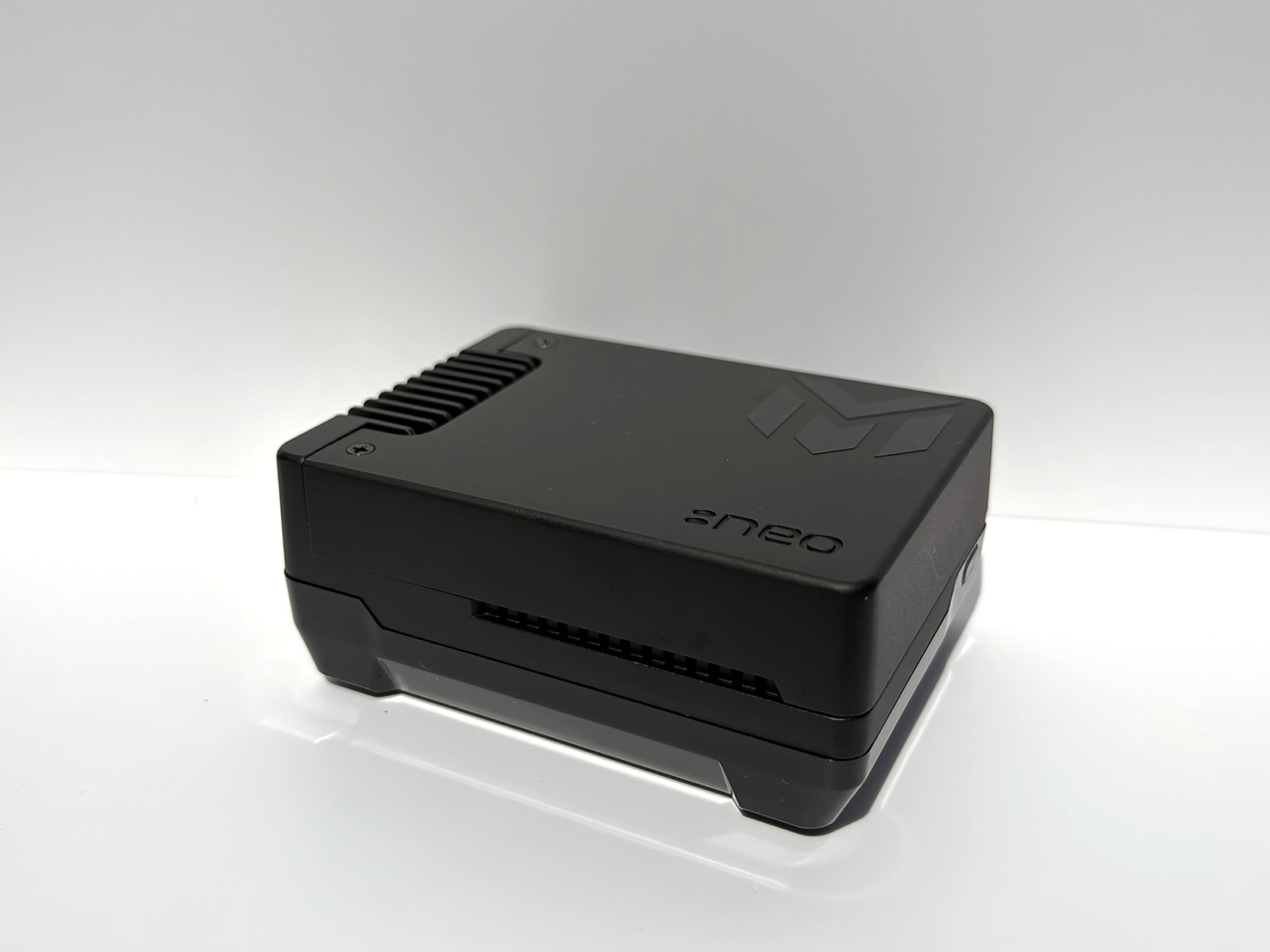
It only lets your miners work with real surplus – according to the thresholds and order you have set. It runs on Home Assistant, locally in your home, with no cloud and no subscription: pay once, no running costs – and your data stays with you.
MINEOMATBOX HOME · €499
up to 8 miners · incl. VAT, plus shipping
To get started: MINEOMATBOX MINI for €299 (2 miners).