
Term & practice
Surplus mining.
Surplus mining means running Bitcoin miners exclusively on the surplus electricity of a solar system: a miner controller reads the surplus at the inverter and adjusts the miners step by step to the available power – without grid electricity and without draining the battery.
It describes a way of operating, not a device – all you need is a miner and a controller. Whether you already run one or are just thinking about it: this page defines the term, sets it apart from similar ideas and shows what already runs in real systems today.
Background
Why surplus mining is needed.
Exporting to the grid pays less and less. In Austria and Germany it now earns just a few cents per kilowatt hour – and during hours with negative spot prices, many new systems there get nothing at all. These hours increase every year, exactly when a solar system produces the most. Feed-in tariffs are falling in many other EU countries too.
A battery, hot water and an electric car absorb part of the surplus, but on good days they are full early. Surplus mining is the last stage of this cascade: a controllable consumer that takes up the remaining kilowatt hours – adjustable second by second, unlike an immersion heater or a wallbox.
In three sentences
How it works.
The full version with figures, curves and edge cases is in the guide. Here is the short version.
Measure
The controller reads the surplus directly at the inverter and knows solar output, household consumption and battery level.
Regulate
Miners run in stages on whatever is left – from standby to full load, one after another if you have several.
Decide
When the spot price is high, the box pauses and exports to the grid. You set the rule, the box carries it out.
Distinction
What surplus mining is not.
Knowing what it isn’t is half the definition.
Not grid-powered mining
Running miners on grid electricity means paying the full energy price of your electricity contract. Surplus mining is measured against the feed-in tariff you forgo – a fraction of that, and nothing at all during hours with negative spot prices. A different calculation, not a promise.
Not a Bitcoin heater
Bitcoin heaters usually run on grid electricity during the heating season and pay their way through saved heating costs. Surplus mining is the counterpart for the sunny season. Both concepts can coexist.
Not automatic
Surplus does not always become Bitcoin. Mining is one use among several: the battery, hot water and wallbox can take priority, and above your price threshold, grid export comes first – depending on how you set it up.
No promise of returns
Earnings fluctuate – with the Bitcoin price and with how much computing power is competing worldwide at the time. Surplus mining is a use for electricity that would otherwise leave the house for a few cents – not a savings account and not investment advice.
Field evidence
Proven in practice, not on the drawing board.
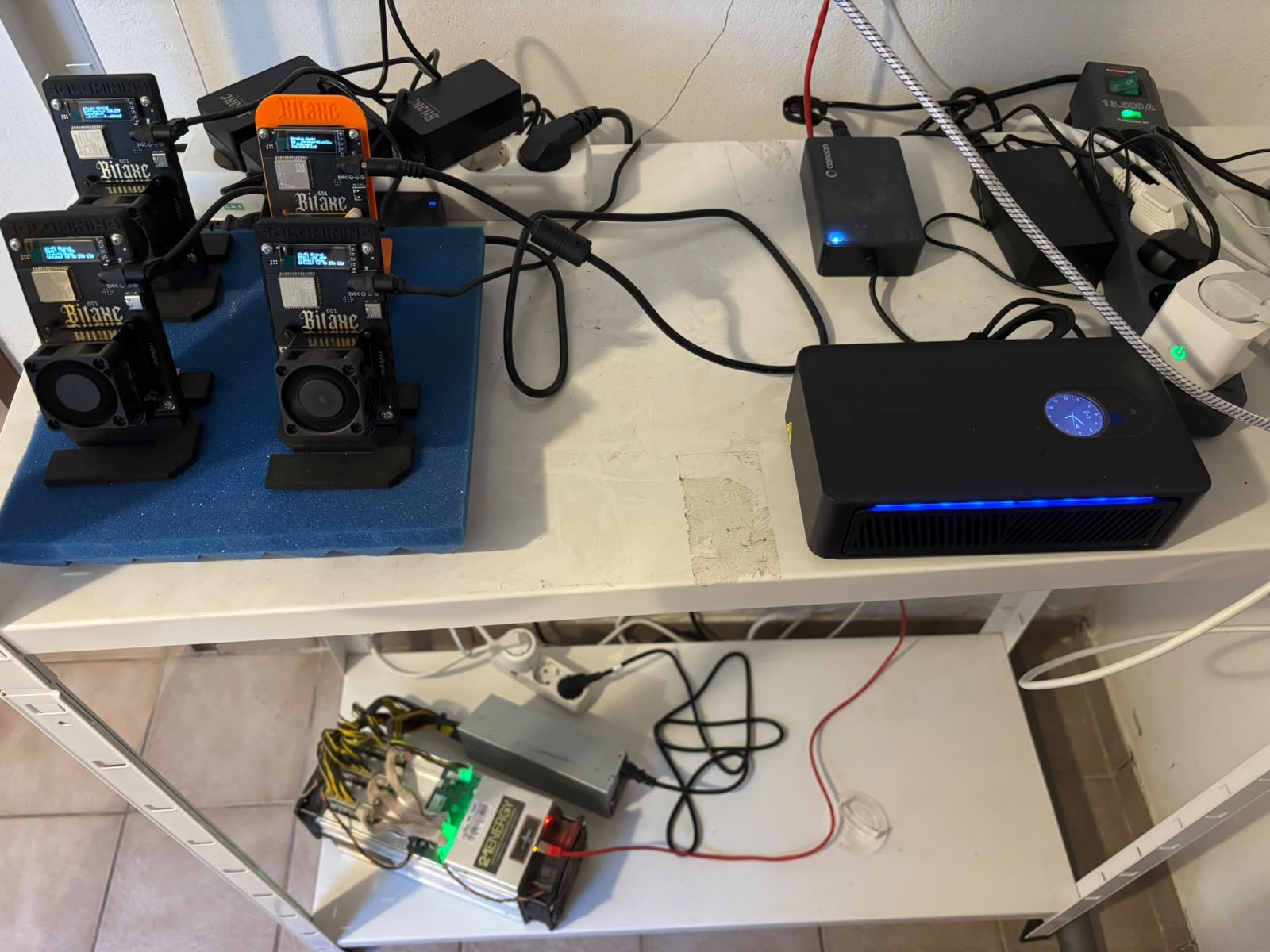
Surplus mining runs today in 30+ systems with 89 miners and over 580 kWp of solar capacity in 6 countries – controlled by the MINEOMATBOX. What runs reliably in the largest systems will have no trouble at home.
The matching controller
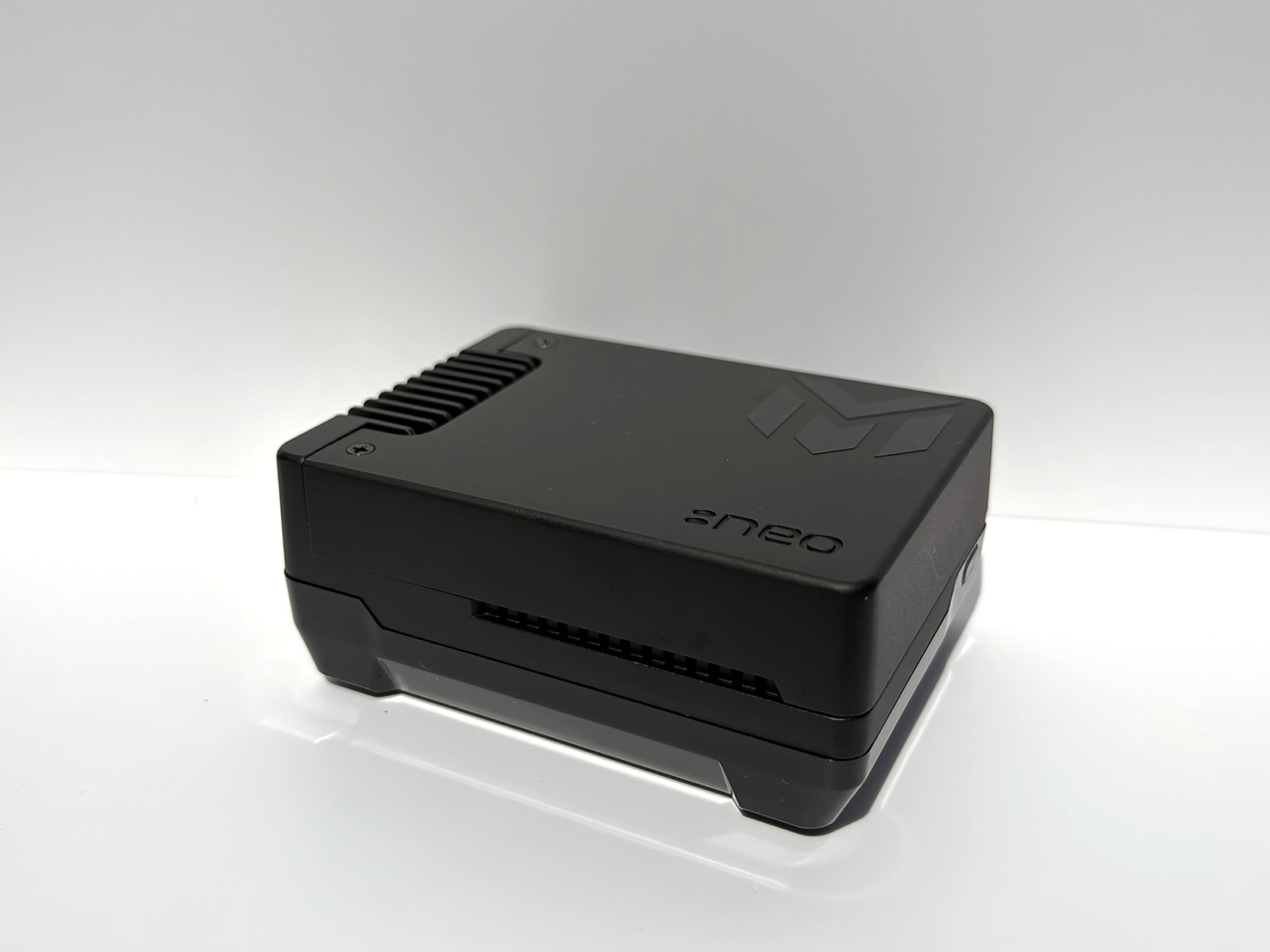
Surplus mining needs exactly one box.
Measure, regulate, decide – it handles the three steps above on its own, locally in your home on Home Assistant, with no cloud and no subscription. You decide how it regulates: mining mode, battery handling, the order of your miners, price thresholds.
MINEOMATBOX HOME · €499
up to 8 miners · incl. VAT, plus shipping
To get started: MINEOMATBOX MINI for €299 (2 miners).