
Guide · Updated August 2026
Using solar surplus wisely.
Exporting to the grid pays less and less. Here is an honest comparison of everything your surplus electricity can do instead – with costs, limits and real figures.
The situation
Why the question is different in 2026.
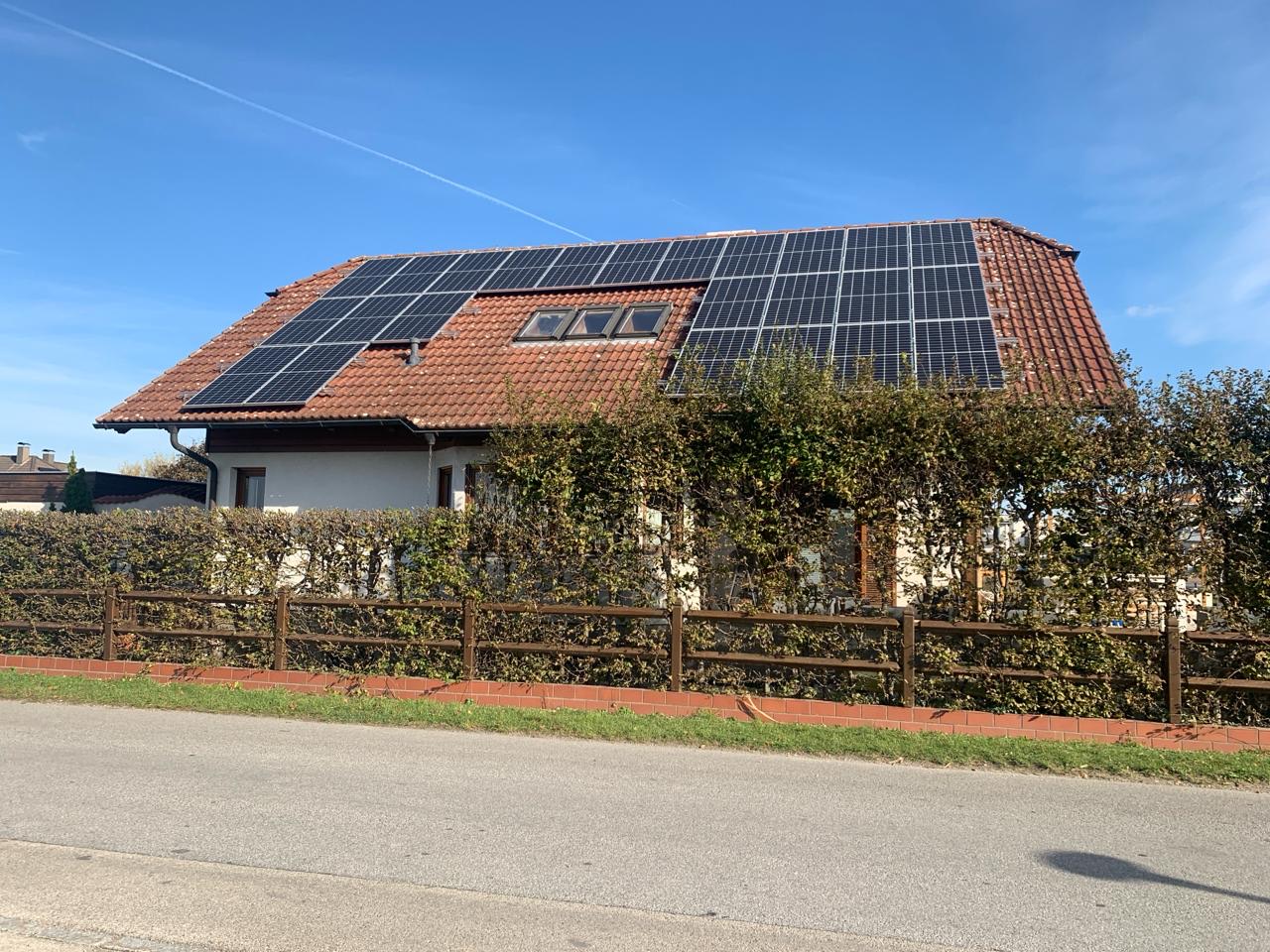
For years the answer was simple: send the surplus to the grid and collect the payment. That is now changing. In Germany, the feed-in tariff for new systems up to 10 kWp is around 7.8 cents per kilowatt hour – and since the Solar Peak Act (Solarspitzengesetz), new systems get nothing at all during hours with negative spot prices.
In Austria, the OeMAG feed-in tariff has fallen to its legal floor of around 6.8 cents. At the same time, grid electricity costs around 22 to 38 cents depending on country and tariff – usually 22 to 30 in Austria, often considerably more in Germany. Feed-in tariffs are falling in many other EU countries too; the figures here are from Austria and Germany.
Every kilowatt hour you use yourself is worth around three to four times as much as one you export.
The only question is which consumer takes up your surplus – and what happens once they’re all full.
The comparison
Six options, one system.
None of them is “the one solution” – only the right order makes it work as a whole.
Battery storage
60–80% self-consumptionThe classic: it shifts surplus from midday to the evening and raises self-consumption from a typical 25–35% to 60–80%. But: it costs several thousand euros, and on sunny days the battery is often full by mid-morning – the remaining surplus still needs somewhere to go.
Makes sense for almost everyone – but only partly solves the problem.
Hot water (immersion heater)
from approx. €850 installedAn immersion heater in the hot water tank turns surplus into heat. Cheap to buy (device €50–400, installed €850–2,300), but limited: once the water is hot, that’s it – in summer often after just one or two hours.
Good as one building block, especially if you use a lot of hot water.
EV charging (surplus charging)
22–38 ct/kWh savedA smart wallbox charges the car only with the surplus currently available. Every kilowatt hour charged this way replaces expensive grid electricity. The catch: the car has to be at home during the day – and for commuters, that’s often exactly when it isn’t.
Strong if your car is in the garage at midday.
Heat pump
more efficient than any immersion heaterWith energy management, the heat pump uses surplus for heating and hot water – each kilowatt hour of electricity produces three to four kilowatt hours of heat. The catch: in summer, when most of the surplus occurs, it hardly needs any energy.
Effective in spring and autumn – almost no help in summer.
Energy community (Austria)
12–20 ct/kWhIn Austria, you can sell surplus directly to neighbours through an energy community – well above the tariff paid by OeMAG, Austria’s feed-in settlement agency. It takes organisation, fellow members and patience with the paperwork; the volumes usually stay small.
Interesting if your municipality already has one.
Bitcoin miner
A miner is a controllable consumer that can absorb every remaining kilowatt hour – even when the battery is full, the water is hot and the car is gone. It is the only building block on this list whose consumption you set yourself instead of waiting for it.
For this to work, you need a controller that reads the surplus at the inverter and adjusts the power step by step – and that stops again when the spot price is so high that exporting to the grid is the better choice. This principle is called surplus mining.
The benchmark stays the same: you calculate against the feed-in tariff you forgo – not against grid or battery electricity.
The consumer of last resort: it takes what nothing else can.
Conclusion
A sequence, not either/or.
The strongest strategy is a cascade: the surplus first covers the household, then the battery, then hot water or the electric car. The problem is the good day – that’s when all these stages are full early, and exactly when the system produces the most.
That leaves two options for what’s left over: you export it at the low tariff – or you add a stage at the end of the cascade that never gets full. That’s exactly where the miner belongs: not instead of the battery, hot water or electric car, but after them.
Whether this pays off for your system depends on your surplus profile. That’s why this guide doesn’t end with a flat figure but with a calculation using your own values: the solar mining calculator.
The matching controller
The last stage of the cascade.
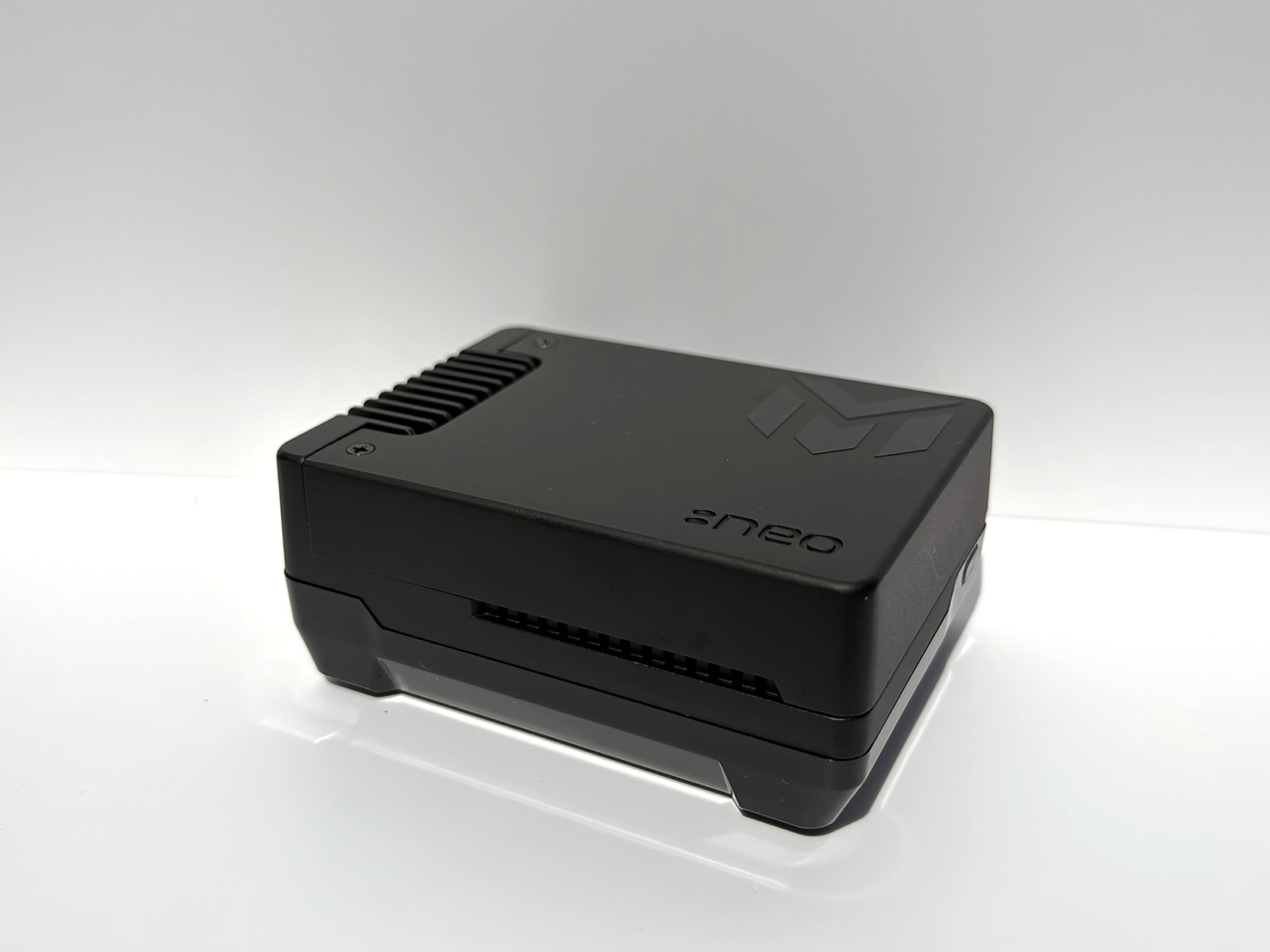
For the kilowatt hours no other stage can take: the MINEOMATBOX reads the surplus at your inverter and regulates your miners accordingly – by the rules you give it. It runs on Home Assistant, locally in your home – no cloud, no subscription.
MINEOMATBOX HOME · €499
up to 8 miners · incl. VAT, plus shipping
To get started: MINEOMATBOX MINI for €299 (2 miners).